
Bitcoin Mining in 2025: Trends, Resilience & Near-Term Opportunity
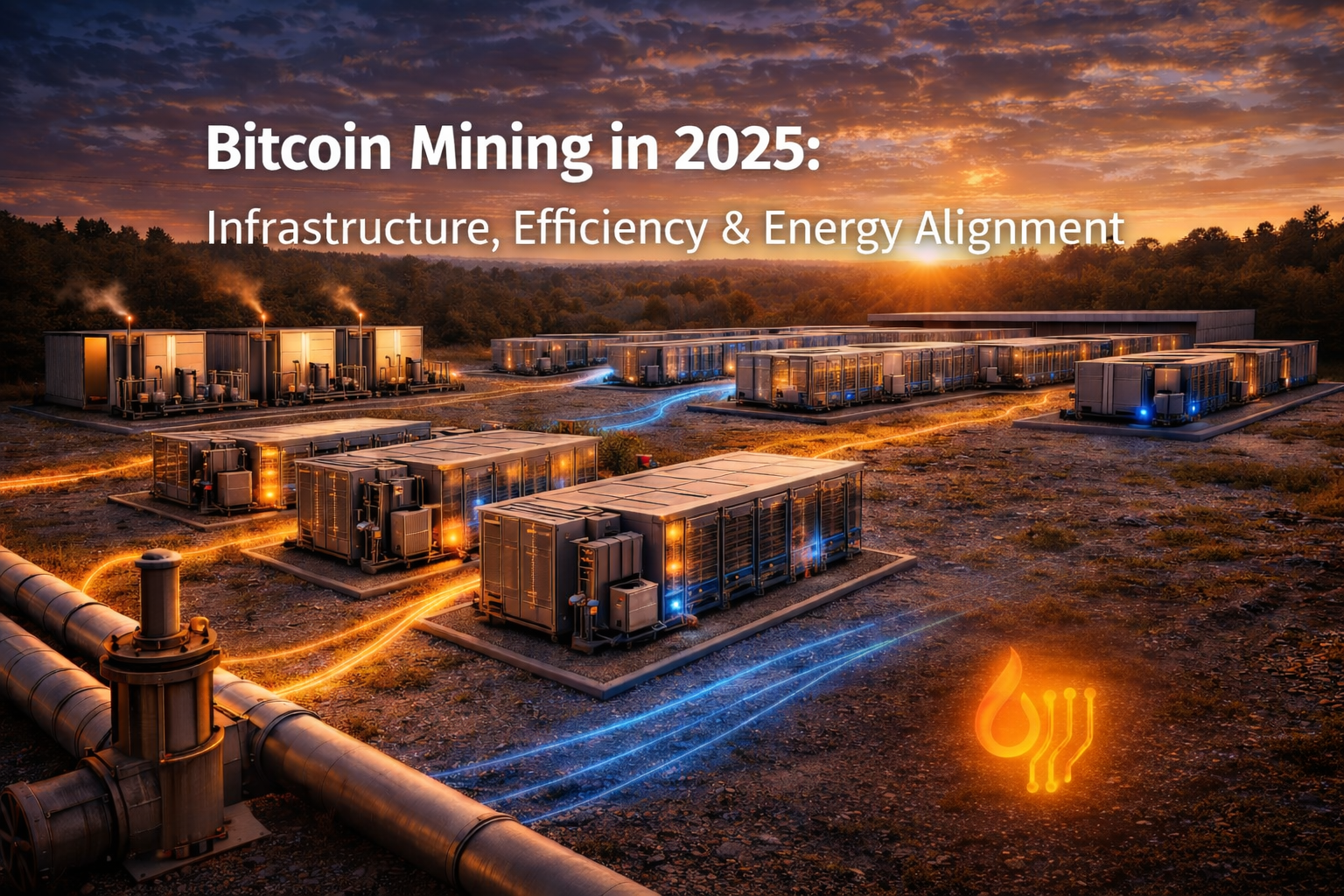
Bitcoin mining, once dominated by speculative narratives and boom-bust cycles, is entering a more disciplined phase of maturity in 2025.
Current trends point to a convergence of network stability, operational efficiency, and energy-aligned infrastructure, creating conditions that support durable, cash-flow-oriented mining operations.
For infrastructure-focused companies like Mindstream, LLC d/b/a Mindstream Energy, these trends reinforce the rationale behind deploying capital into modular, energy-backed mining assets, and financing that deployment through structured instruments such as fixed-rate bonds.
- Network Fundamentals Are Strong
Bitcoin’s core network metrics, particularly hash rate and mining difficulty, have demonstrated resilience even amid macroeconomic uncertainty. Rising hash rate reflects continued miner confidence and network security, while periodic difficulty adjustments maintain equilibrium across market cycles.
For infrastructure investors, this stability matters. A predictable, self-balancing network reduces volatility at the operational level and supports long-term planning, an essential characteristic for mining strategies designed to generate recurring operating cash flow, rather than speculative returns.
- Efficiency Is Driving Mining Profitability
Modern Bitcoin mining is increasingly defined by cost discipline and operational efficiency. Advances in ASIC hardware, containerized deployment models, and centralized operations have materially reduced unit costs and improved uptime.
When these efficiencies are paired with low-cost energy sources such as natural gas, miners can maintain margin resilience even during periods of price compression. This shift favors operators who treat mining as infrastructure, not speculation, deploying capital into modular systems that can be scaled, redeployed, and optimized over time.
This efficiency-driven model aligns closely with debt-financed strategies where predictable performance and disciplined deployment are critical.
- Sustainable Energy Adoption Is a Competitive Advantage
Environmental, Social, and Governance (ESG) considerations continue to influence capital allocation across digital infrastructure. Mining operations that responsibly integrate energy, such as monetizing underutilized natural gas or reducing waste through on-site generation, are increasingly viewed as institutionally viable.
Beyond reputation, energy alignment can directly impact financing outcomes. Projects that demonstrate responsible energy use and operational longevity are often better positioned to access lower-cost capital and longer-duration financing, reinforcing the role of structured investment vehicles.
- Capital Market Interest Remains Strong
Despite broader economic headwinds, capital markets have shown sustained interest in infrastructure-efficient Bitcoin mining. Rather than equity-heavy or speculative structures, investors are increasingly favoring fixed-income instruments that offer defined terms and income visibility.
This evolution reflects the industry’s maturation into an infrastructure asset class, more comparable to energy or data centers than early-stage technology ventures. Structured bond offerings, when supported by revenue-generating assets and disciplined use of proceeds, provide accredited investors with exposure to mining economics while prioritizing capital preservation and income.
- Near-Term Catalysts Could Favor Disciplined Operators
Several near-term developments may further support well-positioned mining strategies:
- Hash rate consolidation as inefficient operators exit
- Continued improvements in hardware efficiency per unit of power
- Expanded access to strategic energy partnerships
- Gradual regulatory clarity in key jurisdictions
Collectively, these factors reinforce a market environment where operational discipline and energy economics, rather than scale alone, determine success.
Conclusion: Mining as Durable Infrastructure
Bitcoin mining in 2025 is increasingly defined by infrastructure optimization, energy strategy, and financial discipline. As the network strengthens and inefficient capital exits, opportunities emerge for operators focused on modular deployment and predictable performance.
For Mindstream Energy, these trends support a strategy centered on deploying revenue-generating infrastructure and financing growth through a Reg D Rule 506(c) fixed-rate bond offering, designed to align investor capital with near-term deployment while preserving long-term optionality.
In a maturing mining landscape, durability, not speculation, is becoming the defining advantage.
This content is for informational purposes only and does not constitute an offer to sell or a solicitation to buy securities; any offering is made only to verified accredited investors pursuant to applicable securities laws.