
The Rise of Sovereign AI Compute, Why Nations Are Rejecting Hyperscaler Dependency
Your Nation’s AI Future Shouldn’t Be Hosted in Someone Else’s Data Center
For the past decade, AI infrastructure followed a simple playbook: rent compute from one of three hyperscalers, build your models, and ship. It was fast, scalable, and convenient.
It was also a strategic liability hiding in plain sight.
In 2026, that playbook is being rewritten — by governments, sovereign wealth funds, defense agencies, and enterprise operators who’ve realized that dependence on foreign-controlled compute is not just a business risk. It’s a national security risk.
The Hyperscaler Dependency Problem
The world’s AI compute is overwhelmingly concentrated in the hands of a few U.S.-headquartered corporations. For American enterprises, this has historically felt like an advantage. For everyone else, and increasingly for U.S. operators with sensitive workloads, it presents an uncomfortable question: Who controls your intelligence?
When your AI infrastructure is hosted on a third-party hyperscaler, you don’t control your data residency. You don’t control your uptime commitments beyond an SLA. You don’t control the terms under which access could be restricted, repriced, or revoked. You’re a tenant, not a sovereign.
That’s not a philosophical concern. It’s a contractual reality.
The Sovereignty Movement Accelerates
The response has been decisive. From the Gulf states to Southeast Asia, from European defense ministries to Latin American resource economies, the message is the same: we need sovereign compute.
National AI strategies are now explicitly prioritizing domestically controlled infrastructure. The EU’s AI Act, Middle East sovereign cloud mandates, and Indo-Pacific digital sovereignty frameworks all point in the same direction: ownership, not access.
This isn’t protectionism. It’s prudence.
And it’s creating an enormous infrastructure gap. The demand for sovereign AI compute, physically controlled, geopolitically neutral, independently powered — is vastly outpacing supply.
Modular, Energy-First Infrastructure Fills the Gap
The challenge with sovereign compute isn’t just political will. It’s economics and speed. Building a traditional hyperscale data center takes years and hundreds of millions in capital before a single inference job runs.
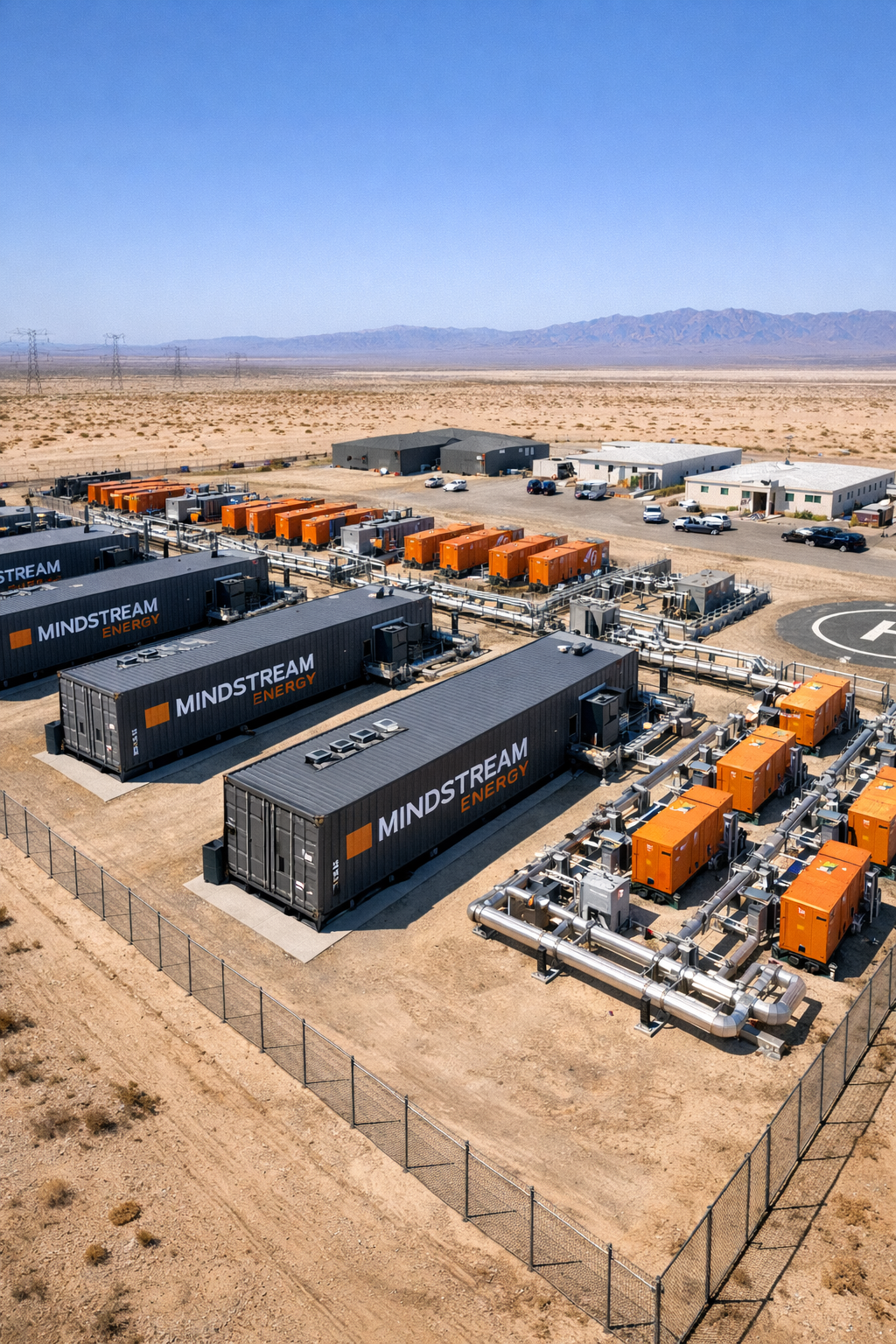
Modular, energy-first AI infrastructure changes that calculus entirely. Containerized AI compute modules, powered by owned energy generation, can be deployed in months, not years, at a fraction of the capital cost. They can be scaled incrementally, operated with full physical sovereignty, and located in jurisdictions that offer regulatory stability and energy abundance.
This is the architecture that sovereign AI demands.
The Window Is Now
The nations and operators who move first to establish sovereign AI compute capacity will define the terms of their own AI futures. Those who wait will find themselves negotiating for access, on someone else’s terms, at someone else’s price.
Mindstream Energy is building the infrastructure that makes sovereign AI compute real: modular, energy-backed, fully controlled, and designed for the operators and nations who can’t afford to outsource their intelligence.
The question isn’t whether your AI should be sovereign. It’s whether you’re building that capability now.
Explore our infrastructure model at MindstreamEnergy.com or reach out to discuss how we can support your sovereign compute strategy.
 Learn more: www.mindstreamenergy.com
Qualified investors may access our current $10 million Reg D Rule 506(c) bond offering through the Investor page on our website. Investments are offered only pursuant to applicable offering documents and to verified accredited investors. Nothing herein constitutes an offer or solicitation.