
Modular Infrastructure Is the Only Way Forward for Energy-Constrained AI
The Power Grid Can’t Keep Up. But Modular Infrastructure Can
AI’s appetite for power is now the defining constraint of the entire industry.
Training a frontier model. Running inference at scale. Deploying autonomous agents across enterprise workflows. Every one of these operations demands massive, reliable, low-cost electricity — and the traditional power grid is increasingly unable to deliver it.
Utility interconnection queues in the U.S. now stretch five to seven years. European grid operators are issuing moratoriums on new large-load connections. Even in energy-abundant regions, the permitting and transmission infrastructure required to feed a hyperscale data center can take a decade to materialize.
The hyperscale model, build big, wait for power, scale vertically, is broken. The replacement is already here.
Why Hyperscale Data Centers Are Hitting a Wall
Traditional data centers are designed around a core assumption: that cheap, reliable grid power will be available at scale, in the right location, at the right time.
That assumption no longer holds.
Grid power for large AI workloads now requires navigating a labyrinth of utility negotiations, transmission upgrades, interconnection studies, and regulatory approvals. The timeline alone kills competitiveness. And when power is finally secured, it comes with utility pricing that scales with demand, often at exactly the moment margins are tightest.
Meanwhile, the AI market isn’t waiting. Operators who can’t access compute now are losing ground now.
The Modular Advantage: Power-First, Not Grid-Dependent
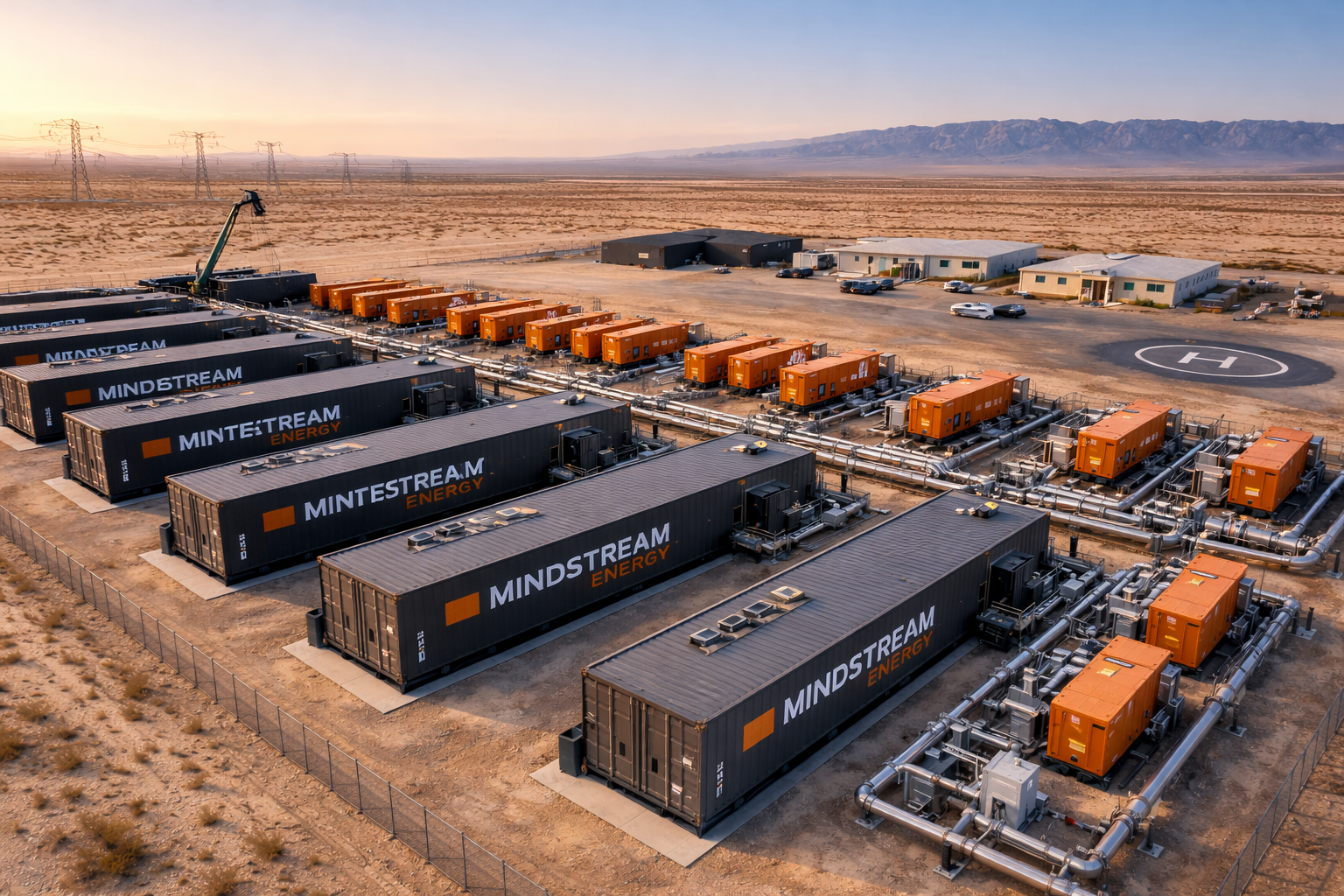
Modular AI infrastructure flips the model. Instead of waiting for grid power, it generates its own, on-site, at scale, under full operator control.
Containerized compute modules, paired with dedicated power generation, can be deployed rapidly in locations selected for energy economics rather than proximity to urban power infrastructure. The result is AI compute capacity that is:
- Faster to deploy — months, not years
- More cost-effective, owned energy at a fraction of utility rates
- More resilient, no single-point grid dependency
- Infinitely scalable, add modules as demand grows
This isn’t a workaround for the energy crisis. It’s the architecture that should have been built from the beginning.
Location as Strategic Infrastructure
Modular infrastructure also unlocks a new strategic variable: location flexibility.
When you’re not tied to grid infrastructure, you can deploy compute where energy is cheapest and most abundant, natural gas fields, geothermal zones, stranded energy sites, rather than where the nearest substation happens to be. This opens up entirely new geographies for AI infrastructure, including regions with significant natural resources, favorable regulatory environments, and strong sovereign incentives.
In a world where AI compute is a strategic asset, controlling where and how it’s powered is not a detail. It’s the whole game.
The Operators Who Win in 2026 Built Modular
The AI infrastructure operators who are thriving today didn’t wait for the grid to catch up. They built around it. Modular, energy-first infrastructure isn’t an alternative for those who can’t afford hyperscale. It’s the strategy chosen by the operators who understood the energy constraint before it became a crisis.
At Mindstream Energy, every infrastructure decision starts with power. Because without reliable, affordable energy, everything else is just blueprints.
Ready to build AI infrastructure that doesn’t depend on grid access?  Learn more: www.mindstreamenergy.com
Qualified investors may access our current $10 million Reg D Rule 506(c) bond offering through the Investor page on our website. Investments are offered only pursuant to applicable offering documents and to verified accredited investors. Nothing herein constitutes an offer or solicitation.